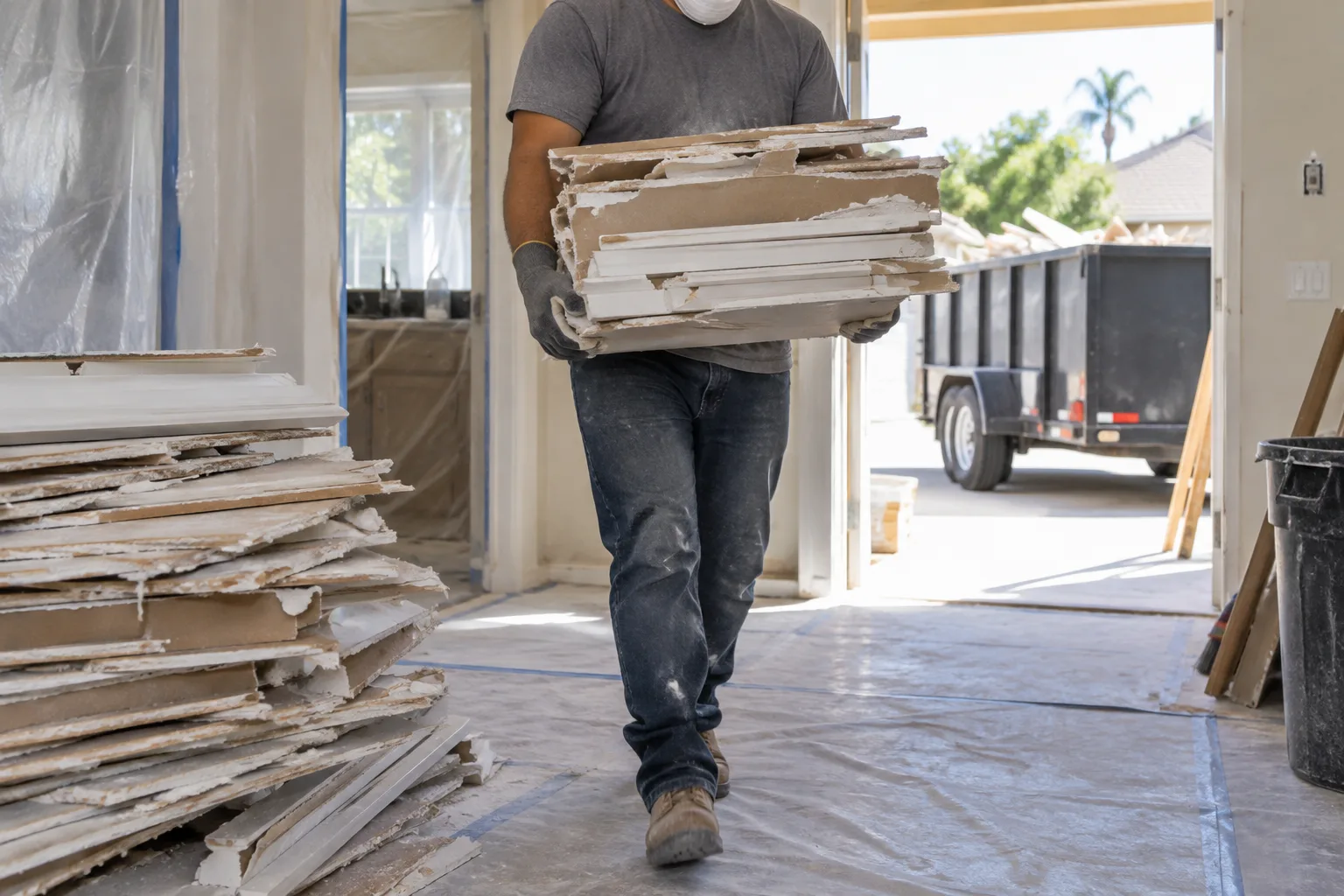
Stacking drywall flat and keeping fine sweepings contained makes the load easier to assess and the path safer to walk.
Start with material condition
Keep clean, dry drywall separate from insulation, screws, trim and general trash. Stop and get qualified guidance if the wall material may contain asbestos, lead-contaminated dust, mold or another regulated hazard.
Build a stable stack
Lay manageable pieces flat on a dry surface. Avoid tall, leaning stacks. Put small fragments and sweepings in sturdy closed containers that can be lifted without tearing.
Protect the loading path
Measure doors, gates, stairs and elevator access. Cover finished floors where needed and keep the route free of tools, cords and loose fasteners.
Give useful estimate details
Share the rough stack length, width and height, the floor level, loading distance and whether the material is dry and separated. Photos help show scale, but they do not replace an on-site review when the material is uncertain.
Pickup-readiness checklist
- Drywall is dry and separated
- Small scraps are contained
- Fasteners are in a separate container
- Access route is clear
- Suspect material has not been disturbed
Where the rules come from
Kern County Public Works publishes material-specific acceptance criteria for construction and demolition waste, and CalRecycle advises checking local facilities before taking material. Those sources support preparation decisions; they do not confirm what a private hauler will accept.