Construction Debris Removal in Bakersfield, CA
Clear the drywall, lumber, tile, packaging and other non-hazardous jobsite debris that slows the next phase of work.
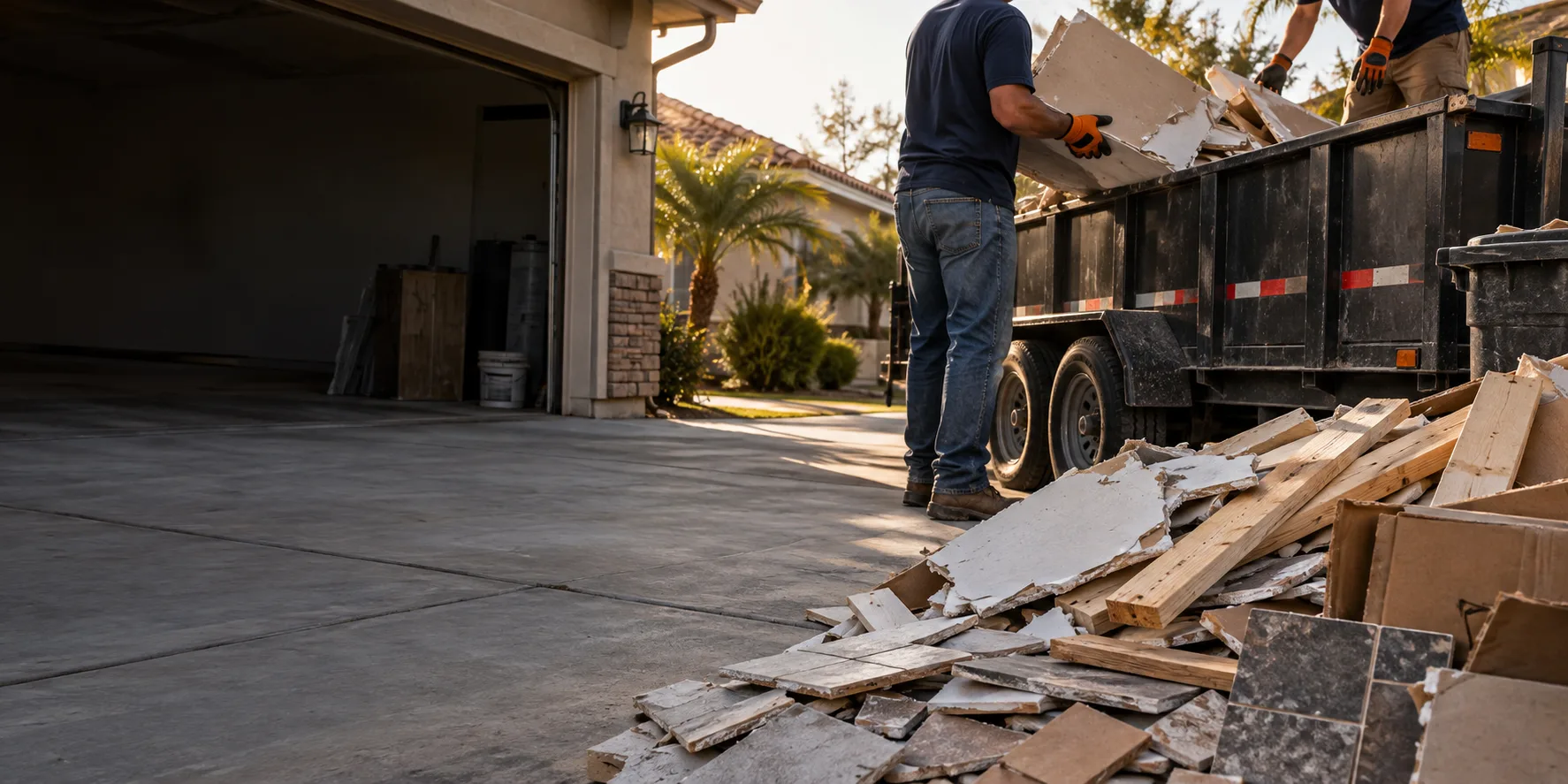
What fits this pickup
- Drywall and plaster scraps
- Cut lumber and pallets
- Tile, flooring and fixtures
- Cardboard and material packaging
- Concrete, brick and masonry by review
Paint, solvents, asbestos-containing material, chemicals, fuel, pressurized cylinders and other hazardous or regulated waste require a separate approved disposal path.
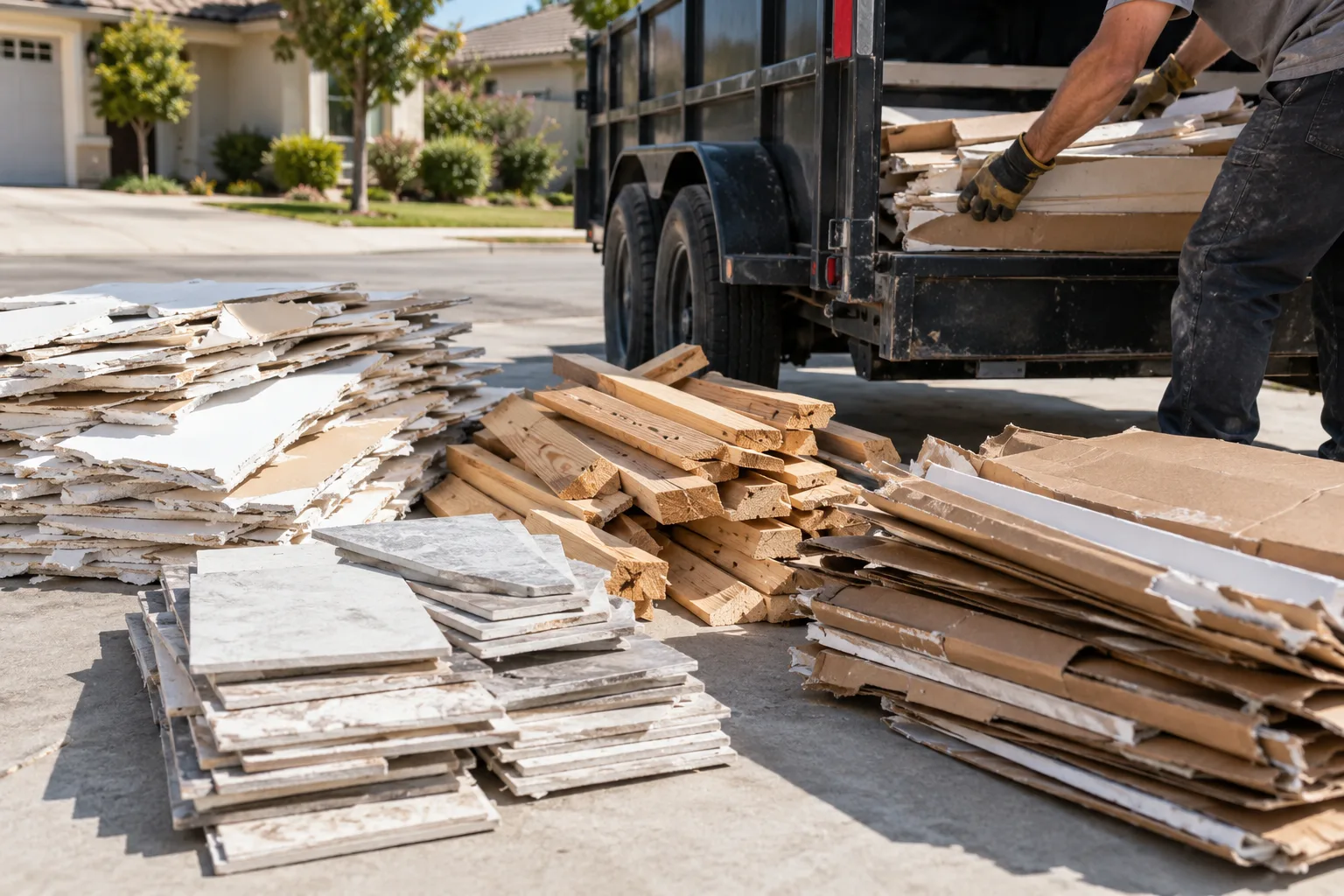
What shapes the estimate
Material type, total volume, weight, access, loading distance, stairs, staging, and whether materials are mixed or separated.
A clear photo can show scale and staging. It cannot confirm the identity of suspect material or guarantee that every item is accepted.
Prepare your job detailsA practical pickup sequence
- Set the boundaryIdentify what is included, what stays and anything that needs special handling.
- Protect accessKeep one stable route open and point out finished surfaces, slopes or narrow turns.
- Stage safelyContain small pieces, keep stacks stable and separate dense or sharp material.
Questions about construction debris removal
Can the material be loose?
Some loose material can be reviewed, but small fragments, dust and sharp pieces should be contained. Stable staging protects the loading path.
Can this be priced from a photo?
Photos help show the pile and access. A final estimate still depends on material, weight, exact scope and conditions confirmed by the provider.
What should stay out?
Paint, solvents, asbestos-containing material, chemicals, fuel, pressurized cylinders and other hazardous or regulated waste require a separate approved disposal path.